.svg)
Tell Us a Little More About Yourself!
Post-Void Residual (PVR) Testing for Men
Many urinary symptoms stem not from how often a man urinates—but from how completely the bladder empties. Post-void residual (PVR) testing measures the amount of urine left in the bladder immediately after urination and provides critical insight into bladder and prostate function.
At The Y Factor, PVR testing is used as a targeted diagnostic tool to help determine whether urinary symptoms are caused by obstruction, bladder dysfunction, or a combination of both. This information allows for more precise, effective treatment planning. In urology, a PVR test helps determine whether symptoms are caused by obstruction, bladder dysfunction, or both.
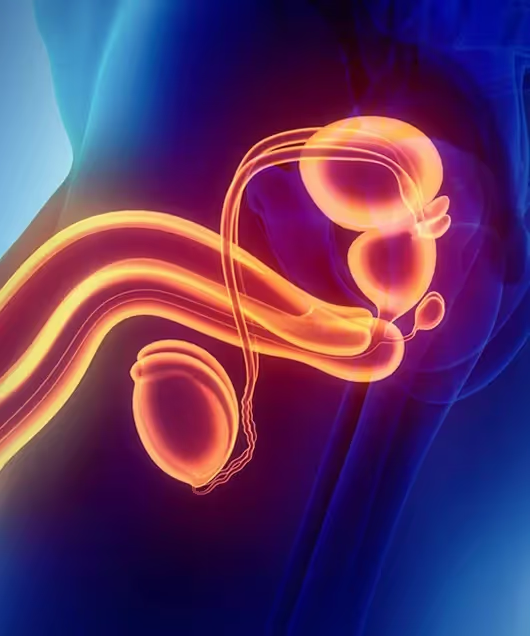

What Is a PVR? Post-Void Residual Test Explained
Post-void residual testing measures the volume of urine remaining in the bladder after a man has finished urinating. Ideally, the bladder should empty nearly completely with each void.
PVR testing answers a simple but important question:
Is the bladder emptying effectively?
Even small amounts of retained urine can contribute to symptoms, while larger volumes may signal more significant underlying issues.

Why Post-Void Residual Matters in Urinary Health
Incomplete bladder emptying can lead to:
- frequent urination
- urgency
- weak or intermittent stream
- sensation of incomplete voiding
- recurrent urinary tract infections
- worsening bladder function over time
Without measuring residual urine, these symptoms are often treated empirically rather than diagnostically. PVR testing provides objective data to guide care.

When Post-Void Residual Testing Is Recommended
PVR testing may be recommended for men with:
- difficulty starting or maintaining urinary stream
- sensation of incomplete bladder emptying
- frequent urination with low volumes
- urinary symptoms not responding to treatment
- known prostate enlargement
- suspected bladder dysfunction
It is commonly used alongside prostate and bladder ultrasound for a comprehensive evaluation.
How Post-Void Residual Is Measured
Ultrasound-Based PVR Measurement
The most common method of PVR testing uses ultrasound. After the patient urinates, a handheld ultrasound device measures the remaining urine volume in the bladder.
This method is:
- non-invasive
- painless
- fast
- highly accurate
No catheters or invasive instruments are required.
Timing and Accuracy Considerations
To ensure accuracy:
PVR measurement is performed immediately after voiding
- the bladder is imaged in multiple planes
- results are interpreted in clinical context
Proper timing is essential, as delays can affect measurement accuracy.
.avif)
What Is a Normal vs Abnormal Post-Void Residual?
While exact thresholds vary, general principles apply:
- minimal residual urine is considered normal
- mildly elevated PVR may reflect early dysfunction
- significantly elevated PVR suggests obstruction or impaired bladder contraction
Importantly, PVR values are interpreted alongside symptoms as part of a broader diagnostic evaluation rather than in isolation.

Common Causes of Elevated Post-Void Residual
Elevated PVR may result from:
- prostate enlargement causing outlet obstruction
- bladder muscle weakness
- neurologic conditions affecting bladder control
- medication side effects
- chronic urinary retention
Identifying the cause is essential for selecting appropriate treatment.

Post-Void Residual and Prostate Conditions
Prostate enlargement can compress the urethra and restrict urine flow. As resistance increases, the bladder may struggle to fully empty.
PVR testing helps determine:
- whether the prostate is causing functional obstruction
- whether bladder changes have developed in response
- whether treatment should target the prostate, bladder, or both
This distinction prevents misdirected therapy.

Post-Void Residual and Bladder Dysfunction
In some men, the bladder muscle itself is the primary issue. Even without significant obstruction, impaired contraction can lead to incomplete emptying.
PVR testing helps identify bladder-driven dysfunction and informs whether further evaluation or alternative treatment strategies are needed.

How PVR Results Guide Treatment Decisions
Post-void residual results may influence:
- medication selection
- need for bladder-focused therapy
- further diagnostic testing
- monitoring of disease progression
- decisions regarding procedural intervention
Treatment becomes targeted rather than trial-and-error.

Who Should Consider Post-Void Residual Testing
Men who may benefit from PVR testing include those with:
- persistent or worsening urinary symptoms
- sensation of incomplete voiding
- unclear cause of urinary complaints
- known prostate or bladder conditions
For these men, PVR testing provides clarity and direction.
Schedule Post-Void Residual Testing
The Y Factor offers post-void residual testing in Houston as part of a comprehensive urologic evaluation. Testing is performed in-office using ultrasound and interpreted in clinical context to guide individualized care.
If urinary symptoms are affecting your quality of life, post-void residual testing can help identify the underlying cause.
Book an appointment to schedule PVR testing.