.svg)
Tell Us a Little More About Yourself!
Fertility Hormone Testing for Men
Male fertility depends on far more than sperm count alone. Hormones play a central role in regulating sperm production, testicular function, and overall reproductive health. When fertility challenges arise, hormone testing provides essential insight into whether the issue stems from testicular function, brain signaling, metabolic influences, or reversible suppression.
At The Y Factor, fertility hormone testing is performed with a reproductive focus, not a generic “low testosterone” lens. The goal is to understand how hormonal signaling is functioning within the hypothalamic–pituitary–gonadal axis and how that signaling impacts sperm production and fertility potential.

.png)
Why Hormone Testing Matters in Male Fertility
Sperm production is a hormone-dependent process. Even when sperm are present, subtle hormonal imbalances can impair:
- sperm quantity
- sperm maturation
- sperm motility
- overall reproductive efficiency
Hormone testing helps determine:
- whether sperm production is being adequately stimulated
- whether testicular function is intact
- whether suppression is reversible
- whether treatment should focus on stimulation rather than replacement
This distinction is critical—especially for men who wish to conceive now or in the future.
.png)
How Hormones Regulate Sperm Production
Sperm production occurs in the testicles but is regulated by signals from the brain. This system relies on coordinated hormone release:
- The hypothalamus signals the pituitary
- The pituitary releases LH and FSH
- The testicles respond by producing testosterone and sperm
Disruption at any level can reduce fertility. Fertility hormone testing evaluates this signaling loop rather than focusing on a single hormone in isolation.
Key Hormones Evaluated in Fertility Testing
Several hormones play critical roles in male fertility and reproductive health and are evaluated as part of a comprehensive fertility evaluation.
Testicular Anatomy and Structure
Ultrasound allows detailed evaluation of:
- testicular size and symmetry
- tissue consistency
- evidence of scarring or atrophy
Blood Flow and Vascular Health
Changes in testicular structure may reflect impaired sperm production, prior injury, or chronic conditions affecting fertility potential.
Varicocele Detection
Varicoceles—dilated veins within the scrotum—are one of the most common reversible causes of male infertility. While large varicoceles may be detected on physical exam, smaller or subclinical varicoceles often require ultrasound for diagnosis.Ultrasound helps assess:
- Doppler ultrasound evaluates blood flow to and from the testicles. Adequate blood flow is essential for:
- testicular function
- temperature regulation
- hormone production
Scrotal Masses and Fluid Collections
Ultrasound can distinguish between:
This differentiation is critical for both reassurance and appropriate referral when needed.
- presence and size of varicocele
- impact on testicular size
- laterality (left vs bilateral)
- solid vs cystic masses
- benign fluid collections
- inflammatory changes
This information is essential for determining whether intervention may be beneficial.
.png)
Who Should Consider Fertility Hormone Testing
Fertility hormone testing is appropriate for:
- men with abnormal semen analysis results
- men with unexplained infertility
- men with history of miscarriage with a partner
- men considering testosterone therapy who want future fertility
- men with symptoms of hormonal imbalance affecting reproduction
Early hormone evaluation can prevent inappropriate treatment decisions.
.png)
Hormone Testing vs “Low Testosterone” Testing
Fertility hormone testing differs fundamentally from routine “low-T” testing. Generic testosterone testing often focuses on whether a man qualifies for replacement therapy. Fertility-focused testing instead asks:
- why testosterone is low or suppressed
- whether sperm production is being adequately stimulated
- whether hormone signaling can be optimized naturally
This approach protects fertility rather than inadvertently compromising it.
How Fertility Hormone Testing Is Performed
Timing and Blood Draw Considerations
Hormone testing is typically performed in the morning, when hormone levels are most reliable. Timing may be coordinated with other fertility diagnostics for efficiency.
Proper timing improves accuracy and interpretability.
Interpreting Results in Clinical Context
Hormone values must be interpreted alongside:
- semen analysis results
- age and clinical symptoms
- metabolic health
- fertility goals
Numbers alone do not dictate treatment. Context matters.
.png)
What Abnormal Fertility Hormone Results May Indicate
Abnormal results may suggest:
- primary testicular impairment
- secondary or functional suppression
- reversible metabolic influences
- need for further diagnostic evaluation
Importantly, abnormal hormones do not automatically mean infertility—many issues are treatable or improvable.
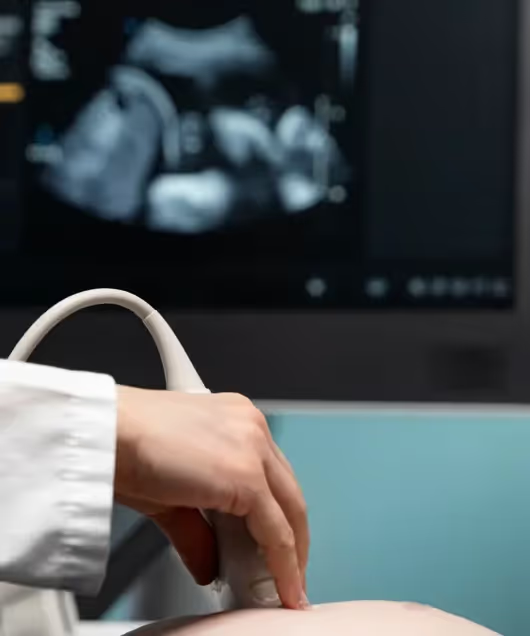
Hormone Testing, Semen Analysis, and Imaging
Hormone testing works best when integrated with:
- semen analysis (functional output)
- scrotal ultrasound (anatomic context)
Together, these tests provide a comprehensive picture of reproductive health.
.png)
How Fertility Hormone Testing Guides Next Steps
Depending on results, hormone testing may guide:
- fertility-preserving medical therapy
- lifestyle or metabolic optimization
- further diagnostic testing
- referral for assisted reproductive planning when appropriate
The goal is to choose the most effective, least invasive path forward.
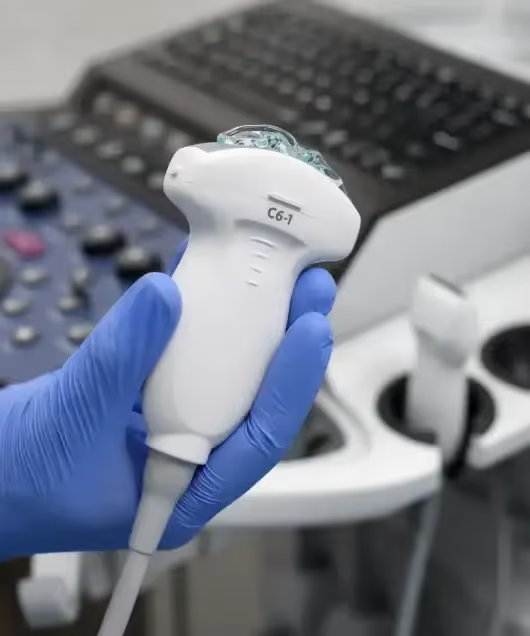
When to Repeat or Expand Imaging
Repeat imaging may be considered when:
- symptoms change or worsen
- fertility goals evolve
- monitoring known conditions
- evaluating response to treatment
Imaging decisions are individualized rather than routine.
Schedule Fertility Hormone Testing
The Y Factor offers fertility-focused hormone testing in Houston as part of a comprehensive male reproductive evaluation. Testing is interpreted clinically and integrated into a clear fertility plan.
If you’re navigating fertility concerns or planning for the future, fertility hormone testing can provide essential clarity.
Book an appointment to begin a fertility-focused diagnostic evaluation.