.svg)
Tell Us a Little More About Yourself!
Sperm Retrieval in Houston
For men facing male factor infertility, sperm retrieval can open the door to fertility treatment options that may not have been possible otherwise. Our clinic employs a patient-centric approach to handling delicate procedures like sperm retrieval and our reproductive urologist, Dr. Russel Williams, is more than happy to discuss your options if you're interested in learning more about yoursperm retrieval options in Houston.

The Sperm Retrieval Procedure Explained
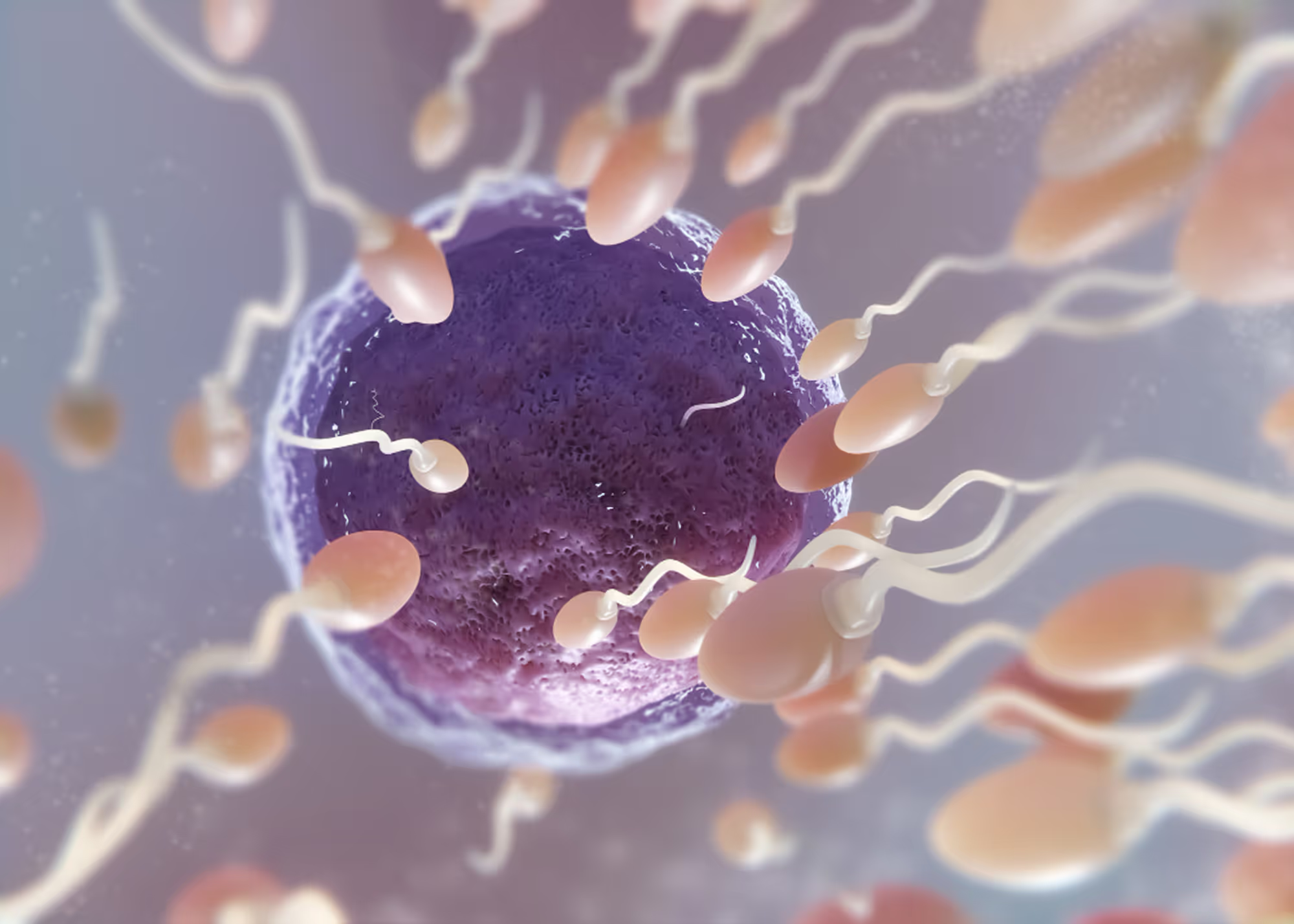
Sperm retrieval is a process of collecting sperm from other parts of the reproductive tract for men who cannot ejaculate or have little to no sperm in the semen (azoospermia). This process may support couples pursuing pregnancy when sperm is not present in the semen or ejaculation is not possible. The retrieved sperm is used for in vitro fertilization (IVF) and intracytoplasmic sperm injection (ICSI) to increase the possibility of pregnancy.
The process may involve a simple aspiration if there is a blockage or an extensive sampling of the testes in those who have sperm production issues. Dr. Russel Williams, reproductive urologist and sperm retrieval doctor at The Y Factor, discourages diagnostic testing and biopsies before sperm retrieval because they can create unwanted inflammation. Once your sperm is surgically retrieved, it can be used with in vitro fertilization, which is typically the preferred method for men facing fertility issues at our clinic.
Determining Your Candidacy for Sperm Retrieval
Good candidates for sperm retrieval may include men with acquired or congenital reproductive tract obstruction, those with azoospermia, or men who wish to undergo this procedure instead of surgical reconstruction. Men undergoing medical treatments such as chemotherapy may also talk with The Y Factor about coordinating with their IVF clinic on next steps. Those who've undergone a vasectomy and wish to have a child without reversing the procedure may also be good candidates for some sperm retrieval treatments like PESA (Percutaneous Epididymal Sperm Aspiration).
The Y Factor Advantage in Sperm Retrieval Care
Led by urologist Dr. Russel H. Williams, The Y Factor is a clinic that's dedicated to providing specialized medical expertise for men's health. We are a men-only clinic, focused on creating a comfortable and accepting environment for men looking for fertility solutions. Here are some of the top reasons men choose us for their sperm retrieval and men's healthcare:
- Microsurgical expertise: Our advanced techniques offer you additional sperm retrieval that supports precise care while reducing unnecessary intervention where possible.
- Comprehensive diagnostic capabilities: The Y Factor provides comprehensive diagnostics for sperm testing, so you can be well-informed about what to expect from the sperm retrieval. We also use these results to tailor a treatment plan for male factor infertility to match your goals and circumstances.
- Dedicated male fertility approach: As a physician-led men's urology and fertility clinic, we explicitly focus on finding and treating the root cause of our clients' male reproductive health issues.
Ready to Begin Your Family Journey? Book Your Appointment at The Y Factor Now
At The Y Factor, we focus on male fertility, vasectomies, erectile health, hormone optimization and general men's wellness. If you're interested in sperm retrieval or just want to talk about your fertility options in a comfortable and private space, we would love to chat.
Schedule a consultation through our contact form or call 832-234-9775 with your questions today!